

Here we go again. The time of the year I am dreading the most. Late sunrise, early sunset. Shorter and shorter days. Not a hint of natural light during the day. Just moody greyness. Not even a glimpse of ‘radiant grey’ or ‘solstice grey’ like those painfully contrived colour names of paint on a cute car. Instead, sluggish-grey, irritable-grey, mood-swings-grey, sleep- disturbance-grey and lack-of-energy-grey are all part of the yearly paint palette.
I’m sure I’m not alone. Ever wondered why so many of us feel like this? Yes, there is a fancy name behind this, Seasonal Affective Disorder (SAD). It is a real issue affecting millions of people. For me, it became an excuse years ago to deep-dive into the importance of light to health and well-being. An excuse that ended up being a lifetime mission, especially after my wonderful GP could only point to chemical compounds as the solution to support my struggle. It sent me down a rabbit hole of circadian clocks, secondary light-sensors and light therapy studies. My big conclusion after years of research? Light, like the breath (subtle plug-in of my previous blog-post exploring the breath), is one of the most valuable and free-of-charge macro-wellness tools; yet, like the breath, it is underutilised, misunderstood and mostly ignored by Western medicine or, at worst, wholeheartedly dismissed as Gwyneth nonsense, aka new agey.
The science behind it is ‘simple’, dare I say. We have evolved for light to impact hormone secretion, amongst other systems in our bodies. We humans, like any other organic life on this little planet called earth, need light. In essence, light is a life tool for busy people, like you and I, to help us regulate and improve the three most critical resources we have at our disposal for daily performance and well-being: motivation, sleep and energy. Unfortunately there is a hidden issue here. Since the industrial revolution, we’ve been living in a society that has disrupted our circadian rhythms (our internal 24hr mechanisms that are triggered by light) and messed up with the intake of natural light. All this has accumulated to a chronic, silent killer, similar to stress, that slowly interferes with our endocrine (hormonal) and nervous system, throwing out of balance neurotransmitters like dopamine, cortisol and melatonin, all of which are absolutely fundamental for our mental and physical well-being.
I am not suggesting we go back to prehistoric living conditions – although the idea of living in a cave, eating when the tribe finds food and spending hours doing nothing sounds so seductive on certain working days of intense and useless back-to-back meetings. Neither am I ignoring the benefits and progress we have achieved in the last century or so. We can’t continue to overlook, though, the hidden high price we’re paying through the deterioration of health and well-being. We have to start course-correcting things. All we need to do is find ways to integrate a number of ‘light hacks’ throughout our daily routines and start reaping the wellness benefits of light – benefits that go beyond treating SAD. For starters:
- Get as much light as you can early in the morning, as soon as you wake up if possible. Bright, ample light. It kicks off the melatonin countdown that regulates sleep. I know, it’s counterintuitive to manage sleep with what you do first thing in the morning, but that’s the intelligence of your internal system for you. It prompts open the gates of dopamine and serotonin, regulating motivation and mood throughout the day. In short, it sets you up for the day and night to come.
- Increase intake of light throughout the day, especially if you’re feeling sluggish or slow. Practice intentionally opening up for your eyes to increase light intake – you know, like you involuntarily do when you’re falling asleep on the couch (as I do) after a long day, only to realise that it is just 9pm. Natural light is always preferred, but for many of us not always within reach, especially if we work in drewry office environment. Perhaps pestering your HR to improve lighting conditions and create a light-therapy room is a fight worth picking up.
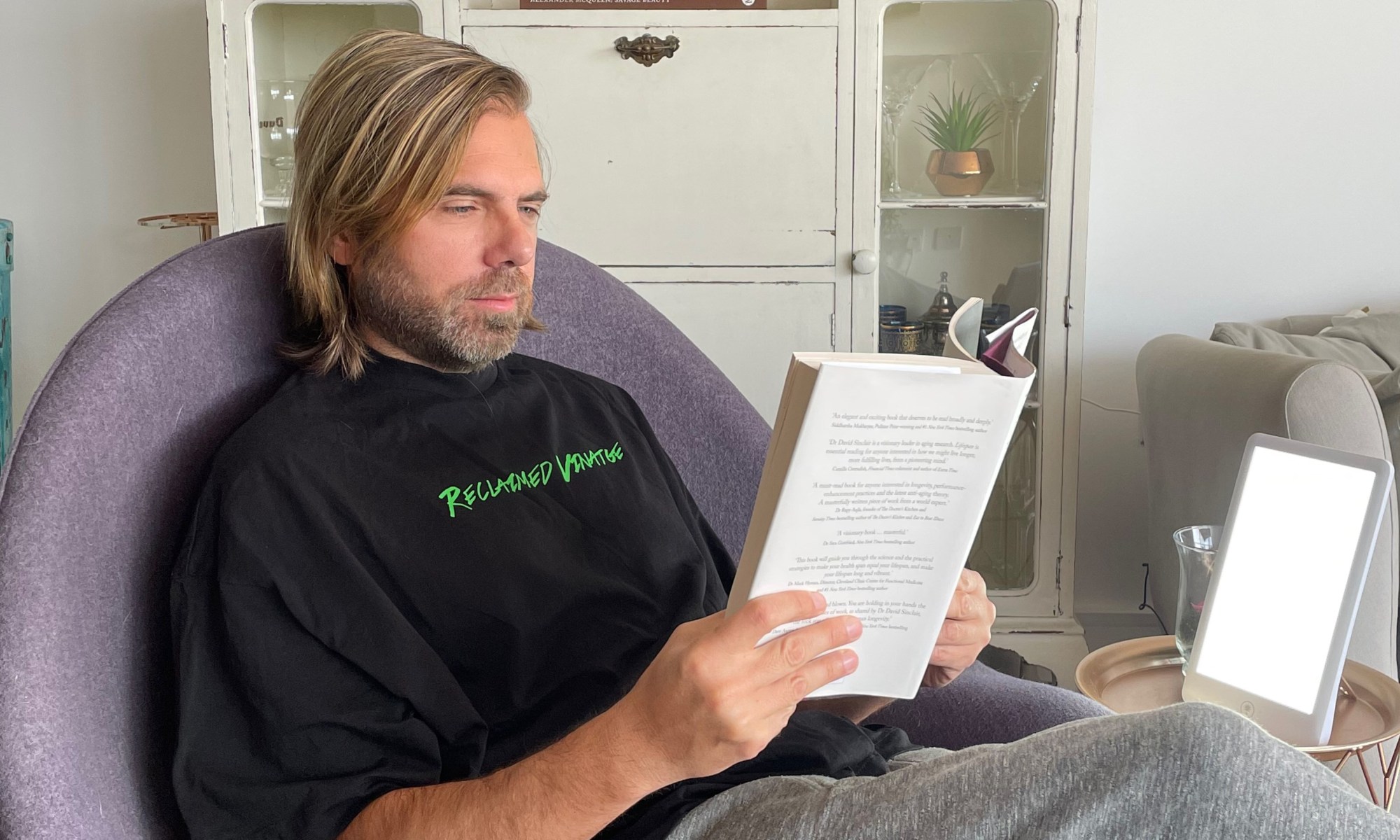
- Speaking of indoors conditions, there are many little things you can do at home to hack light and improve conditions when natural light is not an option. Get a light therapy lamp. I got one and it’s my go-to companion for energy and mood management in the dark hours of winter. Place mirrors on the walls strategically to reflect light. Drop the drapes. Paint walls with bright, light colours. (I wonder if there is a light-consultant I can hire? There must be.)
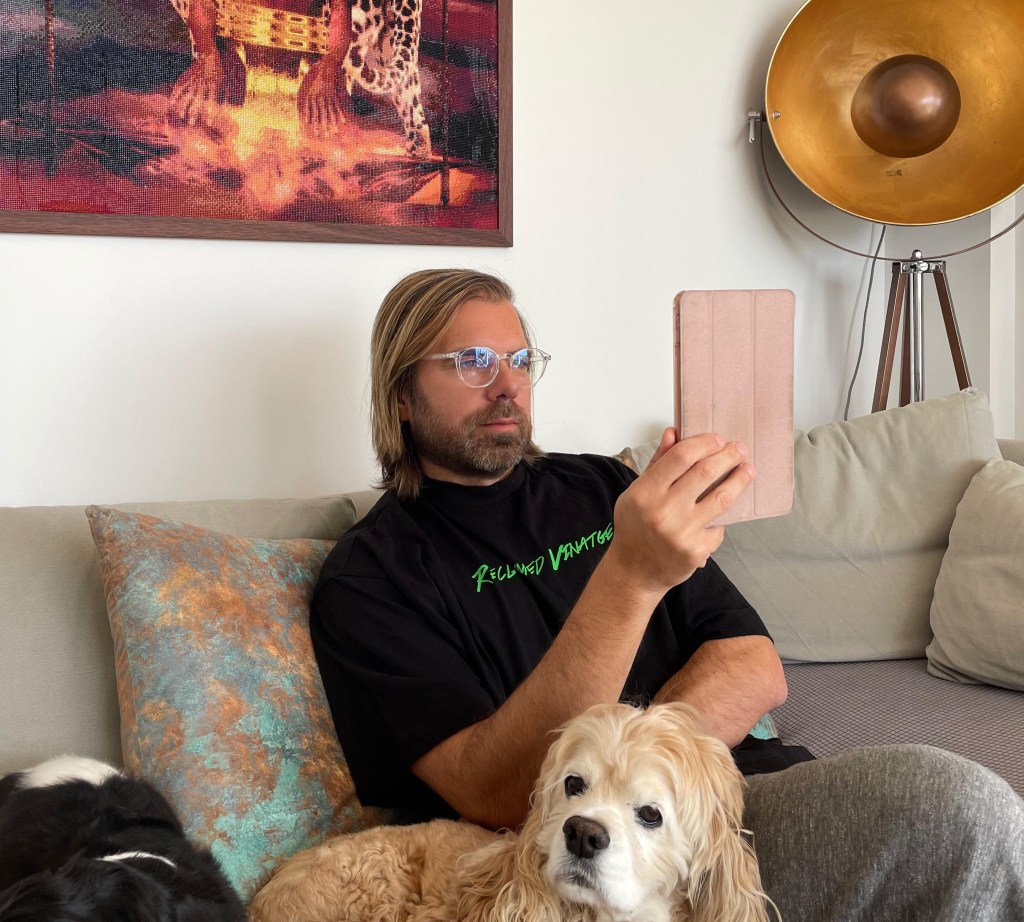
- Lastly and most importantly, apply smart use of light following the 24hr cycle. Which means, do your body and mind a favour and avoid bright lights or the notorious blue wavelength light emitted by screens after a certain time in the day, as you wind down for sleep. There are many tools you can use, from unfashionable glasses to electric dimmers. By the way, blue light is good during the day as it’s linked to stimulating neurotransmitters.
So now you have a second priceless tool, next to breath, for your overall well-being. Light. Use it smartly and you’re bound to see the benefits. For a bespoke ‘light protocol’ to define a routine of personalised tools and measurable outcomes, send me an email, get in touch on Insta or LinkedIn or visit macro-wellness.com for more info.
Select rabbit-hole notes
- https://news.harvard.edu/gazette/story/2007/12/researchers-discover-second-light-sensing-system-in-human-eye/
- https://www.nhlbi.nih.gov/health-topics/circadian-rhythm-disorders
- https://www.ncbi.nlm.nih.gov/pmc/articles/PMC5299389/
- https://mhanational.org/blog/how-blue-light-affects-mental-health
- https://www.netdoctor.co.uk/healthy-living/wellbeing/a10639/how-light-affects-your-health/
- https://www.healthline.com/health/natural-light-benefits
- https://www.frontiersin.org/articles/10.3389/fncel.2017.00091/full
- https://www.healthdesign.org/chd/research/impact-light-outcomes-healthcare-settings#:~:text=Key%20findings%3A%20Light%20impacts%20human,chemical%20reactions%20in%20the%20body.
 Macro-Wellness