

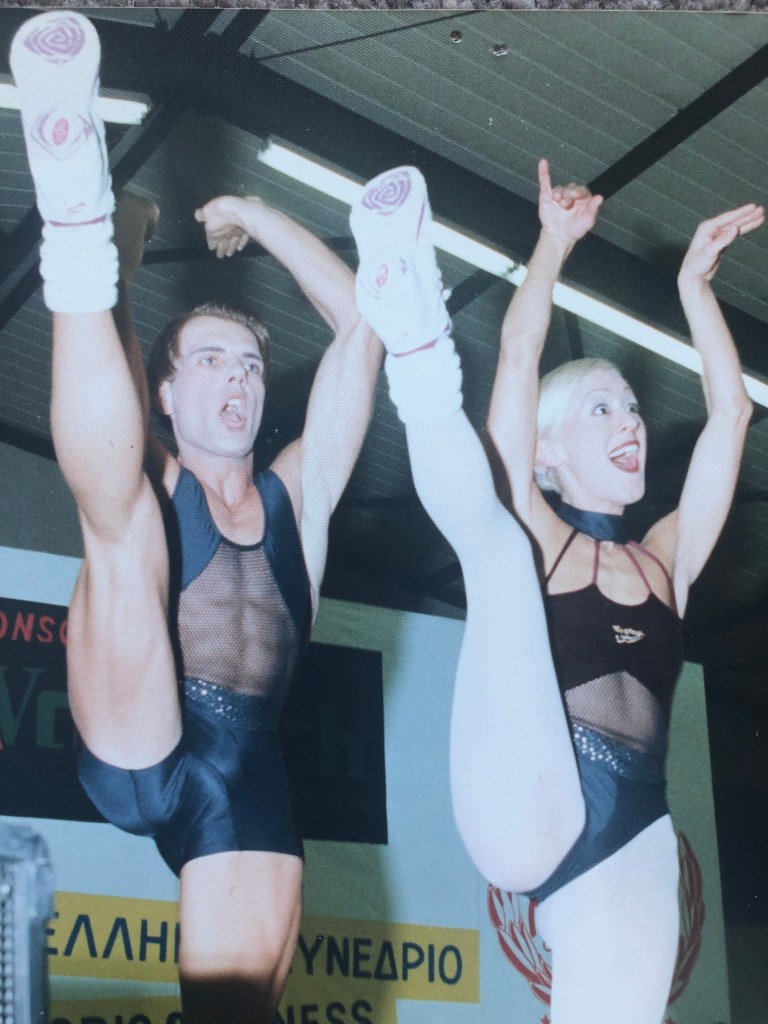
There are many things I cringe about when recalling my youth, you know, those memories that put a smile on your face and make you say ‘what on earth was I thinking’? My stint at training as a ‘competitive aerobics’ athlete (yes, there IS such a thing) has got to be at the top of those toe-curling moments. If you see the pictures, you’ll know what I mean. Oh the glitter and campness of it! I never thought I would expose this side of me to the wider world, but here we are. Blame it on my recent diagnosis of a degenerative change within my right hip joint (cartilage damage and inflamed tendon – I’ll spare you the medical term).
After a few visits to a sports consultant, an MRI scan and some sleepless nights, I naively asked my physiotherapist what might have caused it, other than my ‘degenerative’ 50 years of living. His reply was somewhat expected at first:
- Sitting for a prolonged period of time, staring at a screen – all of you professionals take note.
- Cycling – especially my way of cycling on an ill-fitted bicycle and the fact that it’s been my only form of exercise during the last 14 months due to the pandemic.
Then he asked: did you have any accidents when you were younger, anything that put a strain on your hip, excessive stretch, forceful abnormal movements? It usually happens when we are young, we don’t pay attention to it, because our young body recovers fast, but then it shows up later as we age, with work and life accelerating it. He did not expect the answer I uttered: that yes, for years I was training for competitive aerobics, which involved a 90kg coach sitting on my shoulders drinking frappe (Greek summer iced-coffee beverage) whilst I was in a split position, forcing me to do the split. That yes, I was practicing repetitive high kicks, a hundred in a row on each side, until I would fall flat on the floor, my trembling legs not holding me. That yes, I had many injuries that would heal quickly.
So, here we are now. Hip joint related issues are very common, especially if your job involves prolonged sitting, because of the 90 degrees joint position. You also want to pay more attention to genetics, simply by observing your parents. The fact that my mother is a 75 year old woman with no cardiovascular or other common issues, but had always suffered from joint and muscular problems, should have been a big sign for me! I’m saying all this not to deter you from doing the things you enjoy (in my case, high kicks), but so that you apply a more preventative approach to your health from early on. It’s easy to jump to traditional allopathic solutions. Steroid injections are not my style, they just mask the issue for a while and then it comes back. Surgery should only be the very last resort. The Macro-Wellness framework offers simple solutions to deal with the root of the problem, both preventatively before you reach my stage, as well as after the damage has been made, providing holistic recovery and maintenance support. As usual, a big disclaimer here, if you have serious, painful issues, consult your physician before embarking on any treatments.
Here are the Macro-Wellness steps you (and myself) can integrate in your day-to-day routine:
Movement Charge
Perhaps the most important element. When the injury has already settled, you have to be extremely cautious. You have to work closely with your physiotherapist or your physician to eliminate any triggering movements, calm down the inflammation and then build the muscles around it. It’s a step-by-step process:
- For many injuries, a 9-5 front-of-screen lifestyle becomes a major obstacle to recovery. You need to play around and find the best sitting position that doesn’t aggravate the area in question. Sometimes, the best sitting position is standing! Try it!
- If there is one Movement Charge that works both preventively and during an injury, is stretching (again, consult your physician). Careful and targeted stretching is a great means of increasing the range of motion of joints, reducing pain and improving blood circulation and fluid drainage in the body – in other words, everything the body needs to heal itself! Stretching can be Static (stretch and hold) or Dynamic (extend and contract repetitively in well-managed movements). It all depends on the type of injury and where you are on the recovery curve. For everyday maintenance of usual office ailments, like lower back, shoulder and neck tightness, dynamics stretching is recommended as movement enhances blood circulation.
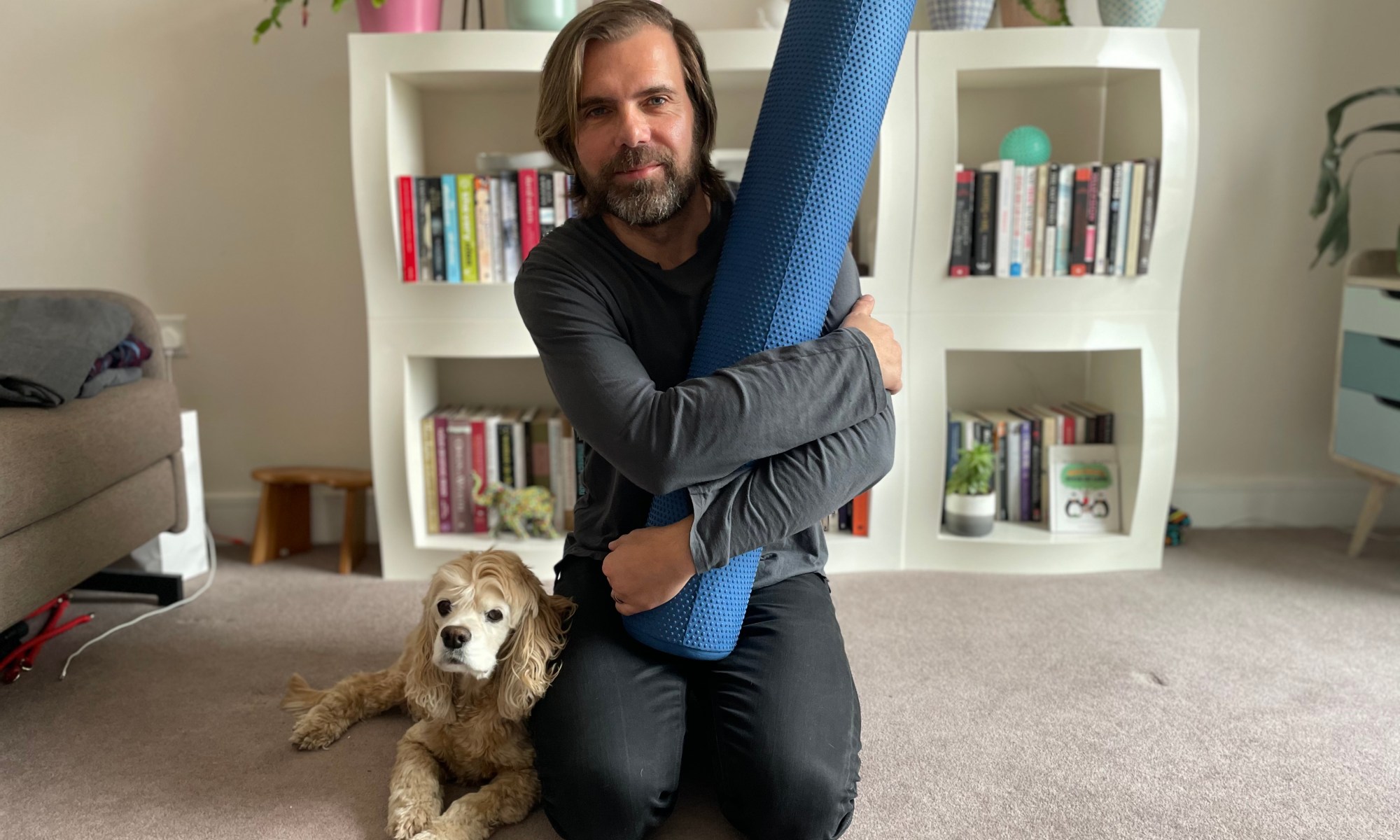
- There is a lot of equipment that is easy to purchase and can be used to enhance stretching. As you have guessed from the picture, the ‘foam roller’ is my best friend, don’t tell Kika! If you’re a busy professional like me, there is nothing more practical and effective than 10 mins of a range of exercises on the foam roller every morning or during the day, with your Teams/Zoom/Webex camera off!
Nutritional Charge
Anti-inflammatory diet – start with some basics, avoiding inflammatory foods aka meat, refined sugars and dairy (I’m sorry, if you’re a fan, just try to cut down), and then integrate:
- Omega-3 rich foods, for example flaxseed, chia seeds and walnuts, practically with every meal (sprinkle on top); or oily fish, like salmon, if you haven’t seen Seaspircay and still eat fish! I still have nightmares from it.
- Vitamin C rich foods support cartilage and ligaments, so go for peppers, broccoli, brussels sprouts, cauliflower and any cruciferous vegetable.
- Magnesium reduces the strain on joints by relaxing muscles. Incorporate magnesium rich foods (such as avocados, nuts and any legumes) and Epsom salt baths
- Cook more with Tumeric, which contains curcumin, a substance with powerful anti-inflammatory and antioxidant properties. When cooking, combine it with black pepper, as piperine enhances curcumin absorption in the body by up to 2,000%
- There are also many herbs. Gotu Kola, a perennial herb native to Asia, stands out. It contains certain chemicals that seem to decrease inflammation and also decrease blood pressure in veins
Mental Charge
Study after study has shown that People who had a positive attitude toward life, especially as we age, much more likely to recover from injuries than those with a more negative attitude. They were also more capable of going about their daily activities. So, here are a couple of tricks:
- Be aware of the issues with muscles, joints and tendons and then accept it with an equiniminus mind is the bedrock for a speedy recovery.
- Looking back and making comparisons to how it used to be is pointless; it actually distracts from healing. Instead, give yourself a pep talk, set some achievable goals, and you will see that recovery happens faster than you think.
- Journaling is an under-valued tool to deal with a physical issue/pain. Write down a story that describes your pain, frustration and hopes as if you were observing someone else – reframing the way your brain perceives the issue. I do this even preventatively for areas in my body that I know are in high risk to get injured.
Emotional Charge
Research has shown that having a social support system can have a positive impact on your overall physical health. This can be your partner, that old schoolmate who makes you laugh, or your older sister who always encourages you to be yourself. Be clear about what you need and when and don’t think you’re not being demanding or needy. You might benefit from speaking to a professional counselor as well – I feel but about my physiotherapist, who doubles up and my psychotherapists too!
Which brings me to the most important point: be kind to yourself. Beating yourself up, thinking about the past won’t do you any favours. Especially while you’re healing, be good to your whole body and soul. Try some proven tricks:
- Fragrance is a proven mood booster, be it essential oil aromatherapy or ridiculously expensive candles – go for natural scents, not every engineered.
- Music is a powerful tool. Find your own personal anthem – just refrain from excessive movement and high kicks, like me.
Speaking of which, you’ve been so good going through this post ‘till the very last word, so you all deserve to feel good about yourself by just looking at this picture below… until next time!
Select rabbit hole notes
- https://www.caryortho.com/avoid-5-inflammatory-foods-ease-joint-pain/
- https://greatist.com/eat/foods-for-sore-muscles#tl-dr
- https://www.health.harvard.edu/mind-and-mood/positive-outlook-speeds-recovery
- https://sportsphysioireland.com/positive-thinking-means-faster-healing/
- https://www.aetna.com/health-guide/mind-matter-boost-mood-speed-recovery.html
- https://www.psychologytoday.com/gb/blog/rethinking-mental-health/201309/10-tips-emotional-healing
- https://www.mentalhealthfirstaid.org/2020/08/the-importance-of-having-a-support-system/
 Macro-Wellness
Great read….Good to be reminded of the simple tricks we so often forget that are so important.
LikeLike